

 Menu
MenuActuation of Hydraulic / Pneumatic Clutches and Brakes
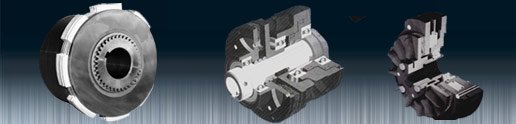
| Type | Pressure Present | Pressure Absent |
| Hydraulically Engaged | Engaged | Disengaged |
| Spring Engaged | Disengaged | Engaged |
Pneumatic / Hydraulically Engaged Clutches and Brakes
Pneumatic clutches and brakes, also referred to as air or hydraulic clutches and brakes, require that air or hydraulic pressure be supplied to an internal piston for engagement. As long as the pressure is supplied, the unit is engaged. When the pressure is removed the hydraulic or air powered clutch or brake is disengaged.
Air or hydraulic fluid forces a piston against a pressure plate that squeezes a set of friction discs together allowing the clutch or brake to transmit or hold torque. An in-depth description of the actuation of our hydraulic / pneumatic / air powered clutch and brake products is available on our actuation comparison page.
Pneumatic / Hydraulically Released (Spring Engaged) Clutches and Brakes
Pneumatic or hydraulically released clutches or brakes are engaged whenever air or hydraulic pressure is absent. While the air or hydraulic pressure is off, the unit will remain on. Internal springs are used to push on a pressure plate. The pressure plate then squeezes a set of friction discs together allowing the hydraulic or air powered clutch or brake to transmit or hold torque.
The unit is disengaged when air or hydraulic pressure is supplied to the piston. The piston forces a pressure plate against the springs thereby removing the spring force from the friction discs. The discs are now allowed to spin freely without the ability to transmit or hold torque. An in-depth description of the actuation of our hydraulic or pneumatic clutches and brakes is available on our actuation comparison page.
Why Use an Air Powered Clutch or Brake?
Known for their reliability and simplicity, hydraulic/air powered clutches and brakes are often used in industrial applications. They deliver more consistent engagement and disengagements, ensuring smooth operation, while their actuation with compressed air allows for quicker response times, crucial for precise control. The absence of an electric coil eliminates a potential heat source, promoting better heat dissipation. Self-adjusting for wear compensation, a hydraulic or air powered clutch or brake is an ideal option where durability and longevity are critical.
Leverage Our Pneumatic Clutches and Brakes Expertise
Carlyle Johnson is proud to be recognized globally for our highly skilled and experienced team of brake and clutch engineers and manufacturers. If you have questions about hydraulic or air powered clutch or brake products for your industrial application, our experts are ready to help. Reach out by filling out the brief form on this page or contact a member of our service team.
Overview
Advantages of Hydraulic / Pneumatic Brakes & Clutches
- More consistent engagement / disengagement than electric devices
- Quicker response times than equivalents
- No electric coil, greater heat dissipation
- Self-adjusting for wear compensation
Advantages of Spring Applied, Hydraulic / Pneumatic Released Brakes & Clutches
- Automatic engagement upon loss of air or hydraulic pressure
- More consistent engagement / disengagement than electric devices
- Quicker response time than equivalents
- Greater heat dissipation due to elimination of the electric coil
CJM PNEUMATIC CLUTCH & BRAKE PRODUCTS
- AHA Model spring set, hydraulic / air / pneumatic multiple disc clutches
- AHA Model spring set, hydraulic / air / pneumatic multiple disc brakes
- AFS Model spring set, hydraulic / air / pneumatic multiple disc brakes
- AFJ Model jaw hydraulic / air / pneumatic brakes


